Chat Us
Chat Us
Chat Us
Beauty Tips / 15 Aug 2026
There is one question that seems simple but often confuses Implovers, moisturizer is it the same as a moisturizer? Or are they actually two different things?
In general in daily life, moisturizers and moisturizers are often used to refer to the same thing. And technically, it's not wrong, both aim to maintain skin hydration. But to be more specific, a moisturizer is a broader term, encompassing all types of products that function to increase the water content in the skin layer. While a moisturizer in dermatological context specifically refers to products that smooth the skin surface by filling the gaps between dry skin cells using lipid or lipid components.
To better understand how the products you use work, there are three main categories of ingredients that are usually found in moisturizers formulas:
Humectant: works by drawing water from the air or deeper skin layers to the surface. Examples include hyaluronic acid and glycerin.
Emollient: fills the gaps between skin cells with lipids, making the skin feel smoother and softer.
Occlusive: forms a thin protective layer on the skin surface to prevent water evaporation. Ingredients like ceramides and petrolatum fall into this category.
A good moisturizer usually combines all three types of ingredients in one formula, so the result is truly comprehensive, not just moisturizing on the surface.
How Does It Work on the Skin?
This is often not realized, dry skin and dehydrated skin are different and each requires a slightly different approach. Dehydrated skin lacks water, which needs humectant ingredients like hyaluronic acid or glycerin to bind water molecules in the skin tissue. If you use a moisturizer that is too rich and oily without humectant content, the skin may feel smooth on the surface but still feel "pulled" or tight from within.
Dry skin lacks natural oils, which is why it needs more emollient and occlusive ingredients that can fill and lock in moisture for longer. That's why modern products usually combine both so they can work for various skin conditions at once.
Benefits of Using Moisturizer that's Worth It!
If you still think moisturizer is optional, this might change your mind:
Maintaining a strong skin barrier. Healthy skin barrier is the main defense against bacteria, pollution, and irritants from the outside. A weak skin barrier makes the skin more prone to redness, irritation, and even infections.
Preventing premature aging. Skin that is left dry for a long time is more prone to fine lines and wrinkles because its elasticity drastically decreases when the moisture level is insufficient.
Skin appears brighter and glowing. A good moisturizer for brightening is not just about its active brightening ingredients, but also about sufficient hydration. Well-hydrated skin naturally looks more radiant and healthy.
Soothing sensitive skin. For owners of sensitive skin, a moisturizer acts as a calming layer that helps reduce itching, stinging, and discomfort.
Implovers, Moisturizers that are good are not the most expensive but the most suitable for your skin condition. Here's the guide:
Dry skin: Choose a cream-textured moisturizer with ceramidesfatty acids. Its texture is more rich and nourishing for skin that really needs extra nutrition. A good moisturizer for dry skin usually has a high content of ceramides to repair the skin barrier at the same time.
Oily skin: Still needs a moisturizer but choose one based on gel or light lotion that contains hyaluronic acid. Look for those labeled non-comedogenic to avoid clogging pores.
Combination skin: Use a lighter texture in the T-zone area and a richer texture on the cheeks that tend to be dry.
Sensitive skin: Look for hypoallergenic formulas without parabens and synthetic fragrances. Avoid products with high concentrations of alcohol as they can worsen irritation.
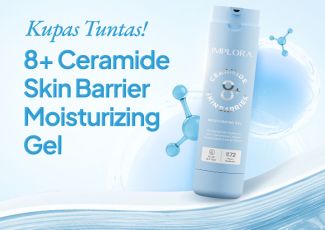
If you're looking for a good facial moisturizer with a comprehensive formula, Implora 8+ Ceramide Skin Barrier Moisturizing Gel could be a worthwhile choice. Contains 8 types of ceramides to strengthen the skin barrier, Sodium Hyaluronate for extra hydration, Licorice Extract for natural brightening, Hydromarine Collagen for skin elasticity, and Centella Asiatica to soothe redness. Its texture is light and quickly absorbed, so there's no sticky or heavy feeling on the skin. Suitable for all skin types, especially very dry or in the process of repairing the skin barrier.
So, Implovers, now you understand the difference between moisturizer and moisturizermoisturizer is the one you consistently use every day.
Well-hydrated skin is not just about appearance, it's actually a long-term investment for your skin's true health.